The Complete Guide to RFP Automation in 2026
Learn what RFP automation is, how it works, key benefits, and how teams use AI to respond to RFPs faster and more accurately.

No one likes RFPs. You only do them because serious buyers request them, and you don't want to lose a potential customer simply because there's too much paperwork.
So why not automate it?
When you treat RFPs as a revenue checkpoint instead of a paperwork exercise, automation starts working for you. Dive in to find out how RFP automation saves you time, money and sanity.
What Is RFP Automation?
RFP automation uses AI to streamline proposal responses and make them easier to manage. Instead of copying answers from old docs or digging through shared folders, teams use software to find, reuse, and draft responses from a single system.
It strips out busywork so teams can focus on clarity, accuracy, and fit. This approach extends beyond RFPs. The same systems handle RFIs and security questionnaires, where buyers ask similar questions with slightly different wording.
How RFP Automation Software Works
RFP automation follows a clear workflow that mirrors how teams already work, with much less manual effort. The process follows five steps:
Building a Centralized RFP Content Library
Everything starts with a shared knowledge base. This searchable library stores approved answers, product details, policies, and company information.
This becomes your RFP response database. Instead of answers scattered across docs and inboxes, they live in a single system that is easy to search and reuse. This is what the AI pulls from when drafting responses.
A robust RFP content library requires more than just storage. It needs verification to ensure accuracy. Document verification features let teams mark content as verified, set review periods, and flag outdated information. Verified documents rank higher in AI search results, ensuring your RFP responses draw from the most current, trusted information.
Using AI to Match Questions with Past Answers
When you receive an RFP, the software scans the questions and identifies any you have previously answered. AI analyzes the language and intent, not just exact keywords, to find the most relevant content from your library.
Over time, machine learning improves these matches. The more your team reviews and approves suggestions, the better the system gets at finding the right answers quickly.
Modern AI tools can also search beyond a single content library. Super searches across 15+ connected tools including Google Drive, Slack, Notion, Confluence, GitHub, and more, finding relevant RFP answers wherever they exist in your tech stack, not just in your formal documentation.
Generating Draft Responses for Review
AI uses the matched content to create a first draft for each question. This is not meant to be the final answer you send out.
Instead, it gives your team a strong starting point. You review, edit, and adjust the response to fit the specific customer and context. The time savings come from not starting with a blank page every time.
Collaborating with Subject Matter Experts
Not every question belongs to the same person. Automated RFP software routes questions to the right experts, like legal, security, or product teams.
Each person can review and update their assigned sections without the email back-and-forth. Everything stays connected to the main response, making collaboration much smoother.
Managing Workflows and Deadlines
Built-in reminders and progress tracking reduce last-minute panic and catch issues before submission. The result is a calmer, more predictable RFP process from start to finish.
Key Benefits of RFP Automation
RFP automation fixes the everyday pain points that make proposals stressful and hard to scale. Teams see the biggest impact in these areas:
Faster Response Times
One of the biggest wins with RFP automation is how much it shortens timelines. Instead of moving question by question, teams can process large volumes all at once and focus their time on review and customization.
"I used to procrastinate RFPs so badly. Each one would take multiple work days. Now I just drop the RFP in and get answers the same day. Clients don't believe we're a 20-person company." Teams using Super's bulk mode achieve 40% time savings on RFPs, with some completing 200-question questionnaires in a single day instead of a week.
Bulk processing features let you upload entire questionnaires and get draft responses for hundreds of questions simultaneously. That kind of time compression makes tight deadlines far less stressful and keeps momentum high across the team.
Consistent and Accurate Answers
Speed only matters if the answers are right. RFP automation keeps teams aligned by using approved, shared language rather than relying on individual memory or outdated files.
Consistency starts with verified source content. Verification systems use review cycles and expiration dates to ensure your team always draws from current, approved information. Verified documents build trust across teams and rank higher in AI search results, reducing the risk of outdated answers appearing in proposals.
Reduced Burnout for Proposal Teams
With less time spent on busywork, teams can focus on strategy, tailoring responses, and highlighting what truly sets the company apart. The work becomes more engaging and sustainable over time.
"Before Super, we had thousands of questions in all the Slack channels from sales, marketing, customer success. Since we implemented Super, that amount of questions has been divided by 10, and it's really amazing because everyone is able to get the information they need," says Christian Riviera, Director of Development App at GraphXSource.
Capacity to Respond to More Opportunities
When each RFP takes less effort, teams can handle more of them. Automation lets you scale your response process without adding headcount or overextending your team.
Agorapulse now handles 10 RFPs per month consistently, processing the same volume much faster and freeing capacity to take on additional opportunities. Teams can paste hundreds of security questions and get all answers in seconds, rather than waiting hours for responses.
Improved Win Rates
Faster responses, clearer messaging, and fewer errors all add up. Automation lets teams submit polished, thoughtful proposals that reflect their best work.
Agorapulse achieved a 98-99% success rate on RFP questions after implementing AI-powered automation, replacing a dedicated RFP tool that required 1-2 hour wait times. Their team now answers RFP questions in seconds, keeping momentum strong throughout the sales process.
When you can respond quickly without sacrificing quality, you gain a real competitive edge in crowded buying processes.
How to automate RFPs using Super
Super turns multi-day RFP marathons into same-day wins. Instead of hunting through Slack threads and old documents, you get instant, accurate answers pulled from your entire tech stack. Here's how to put it to work:
Connect Your Data Sources
Start by linking Super to the tools where your company knowledge lives. This includes Google Drive, Slack, Notion, Confluence, GitHub, and more. The broader your connections, the more comprehensive your RFP answers become. Super searches across all 15+ integrated platforms simultaneously, so nothing gets missed.
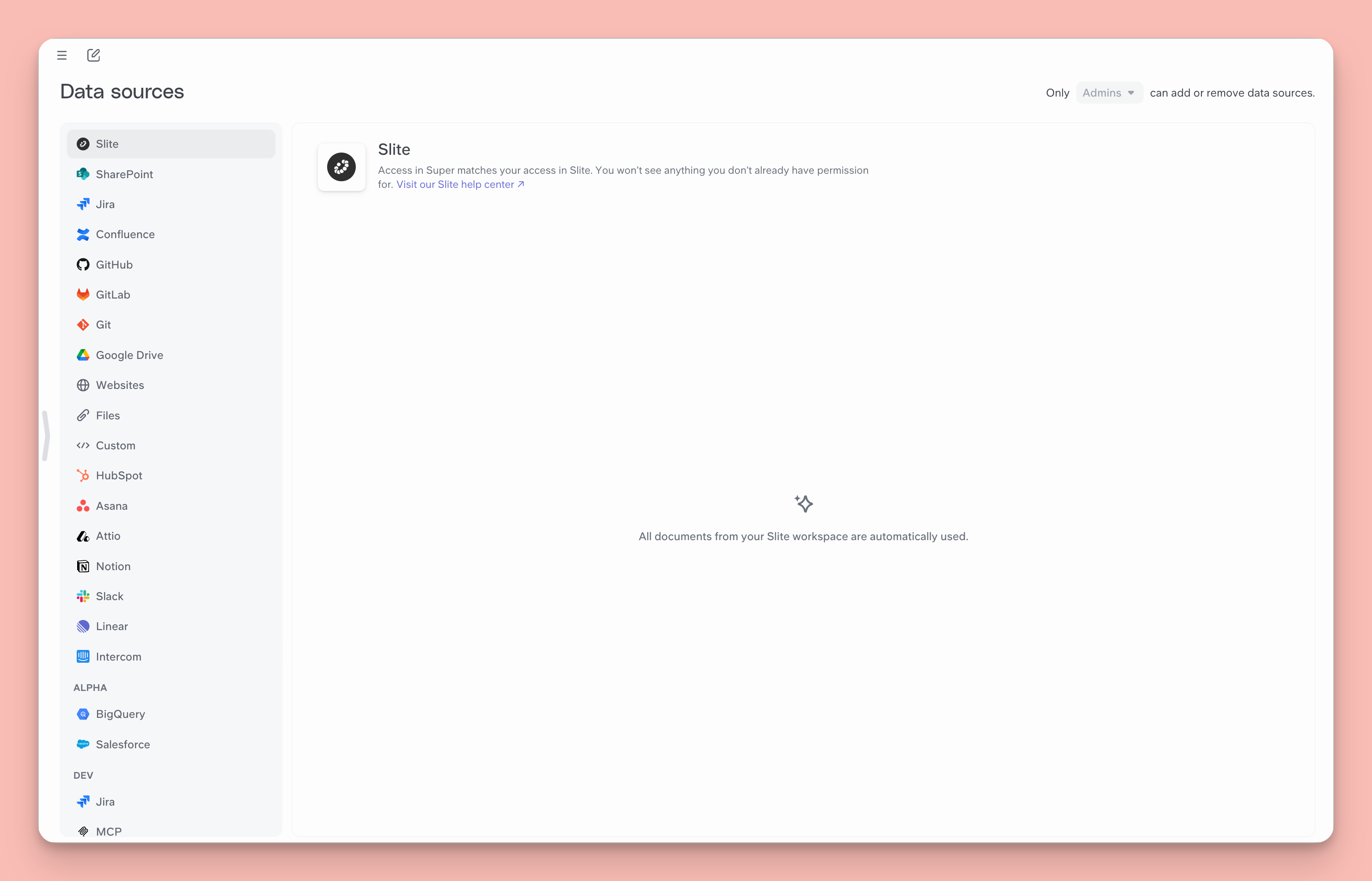
Think of this as building your RFP response database without actually building anything. Your existing documentation becomes instantly searchable and ready to power automated responses.
Access Super's Bulk Mode
When an RFP lands in your inbox, head to Super's Bulk Mode. This is where the magic happens. Instead of answering questions one by one, you'll process hundreds at once.
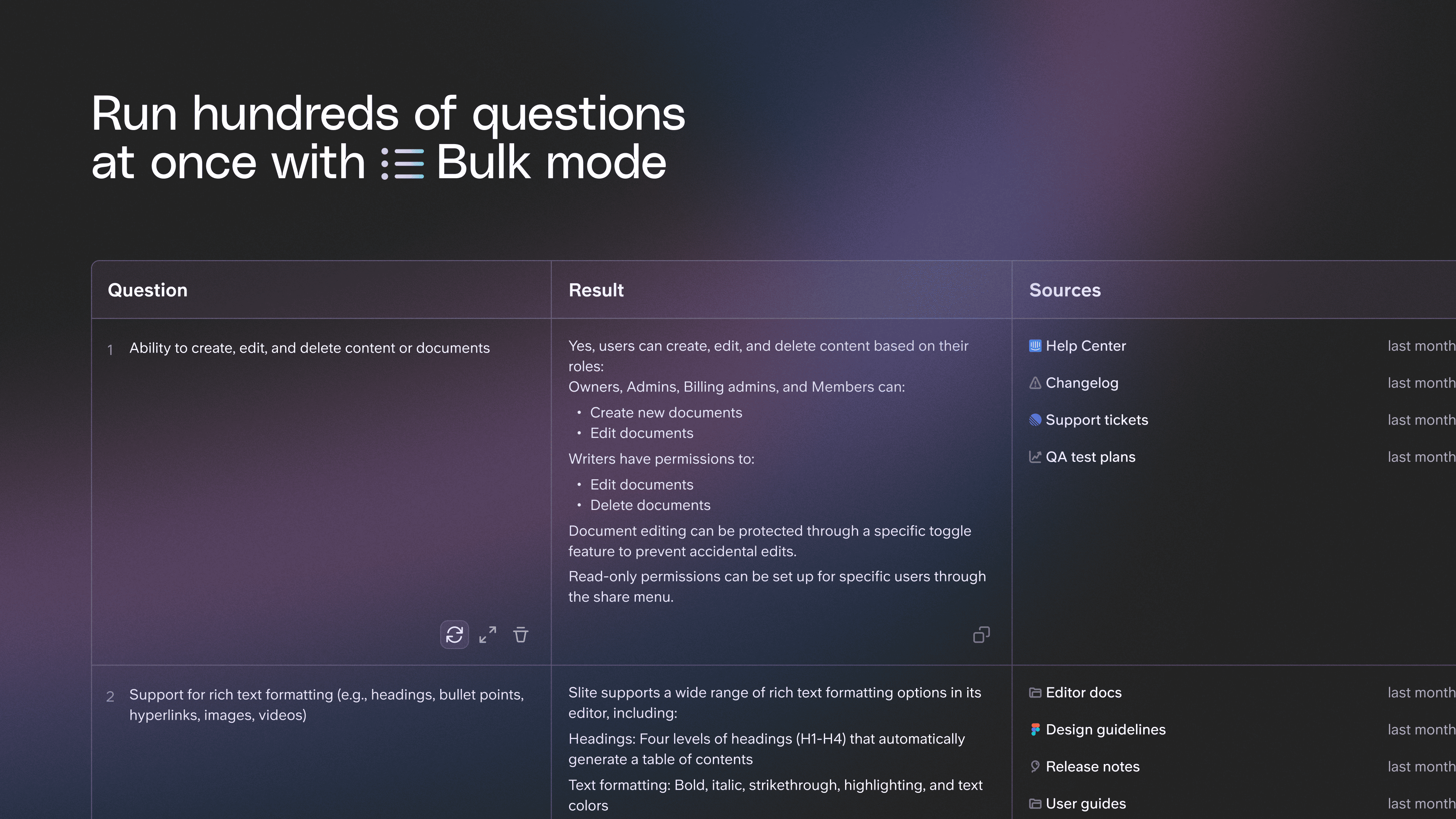
Copy your entire list of questions from the RFP spreadsheet or document and paste them directly into Bulk Mode. Super can handle 200+ questions simultaneously, turning what used to be a week-long project into a single work session.
Apply the RFP Filler Workflow
Select the RFP Filler workflow to optimize how Super searches and formats responses. This workflow follows a smart three-step process:
First, it searches your previous RFP responses from the last year. These are tested, approved answers that have already won deals. Next, if information isn't found in past RFPs, it searches across all your connected company data sources. Finally, it generates professional responses with minimal formatting, ideally under 100 words, ready to paste directly into forms.
Review and Refine Responses
Run hundreds of questions in under 10 minutes. Super returns draft answers with source citations for every response, so you can verify accuracy before submission.
The AI flags any questions where information is missing, uncertain, or requires manual review. These warnings appear as callout blocks, making it easy to spot what needs human attention. Focus your time on these outliers rather than starting from scratch on every question.
Export and Submit
Once you've reviewed and completed any flagged responses, export the completed RFP in your preferred format. Super maintains your formatting and keeps everything organized for easy transfer back into the original RFP document.
The result? Teams achieve 40% time savings on RFPs, with some completing 200-question questionnaires in a single day instead of a week. You submit faster, more accurate proposals without the usual stress and back-and-forth with multiple teams.
Essential Features in RFP Automation Tools
Not all RFP automation tools are built the same. Some focus on drafting answers, others on project tracking, and a few try to do everything at once. Knowing what to look for makes it easier to choose software that actually works for your team.
Content Library and Knowledge Management
A strong content library is the backbone of any RFP automation setup. As products change and policies evolve, RFP content can go stale quickly if no one is watching it.
Companies typically invest 40 hours per RFP response, with an average of 7.3 staff members involved per proposal. Slow responses stall 62% of deals, making speed and accuracy critical competitive advantages.
Look for platforms with built-in knowledge maintenance features. Knowledge management tools identify outdated or duplicate content at scale, making it easier to keep your RFP response database current without manually reviewing hundreds of documents. AI-suggested actions guide teams on what needs attention, so maintenance becomes part of the workflow instead of a forgotten task.
AI-Powered Response Generation
AI-powered RFP software uses natural language processing to understand what a question is really asking. It then suggests relevant answers from your content library instead of relying on simple keyword matches.
This is especially valuable when questions are phrased differently but convey the same meaning. The result is faster drafts and fewer manual edits.
Workflow and Task Management
RFP management software breaks a large proposal into clear tasks. You can assign questions, set deadlines, and track progress in one place.
This visibility makes it easier to spot bottlenecks early and keeps the team aligned as the deadline approaches.
Team Collaboration and Permissions
RFPs usually involve multiple teams, and not everyone should have access to everything. Role-based access lets people contribute where they should, without risking unwanted edits or oversharing.
Security matters when handling sensitive proposal information. Ensure your RFP automation tool respects document permissions so AI only surfaces information users are authorized to see. This keeps confidential content protected while still allowing teams to collaborate efficiently.
Integrations with CRM and Communication Platforms
RFPs do not exist in isolation. Most teams need integrations with tools like Salesforce, Slack, Google Drive, and Microsoft products.
These connections automate the RFP process end to end, pulling in customer data and keeping conversations connected to the work.
Security and Compliance Certifications
RFPs often include sensitive business, legal, and security information. That is why certifications like SOC 2, ISO, and clear data residency policies matter.
They show that the software is built to protect your data and meet the expectations of enterprise buyers and security teams.
Common Myths About RFP Automation
RFP automation sounds powerful, which is exactly why it is often misunderstood. A few common myths tend to hold teams back, even when the tools could clearly make a difference. Let's clear them up:
Automation Will Replace Proposal Professionals
RFP automation tools are designed to support people, not replace them. AI generates first drafts that humans review and refine. The technology removes the tedious hunting through old documents and Slack threads, but human judgment, customization, and relationship-building remain essential.
RFP Automation Is Too Expensive for Most Teams
The best RFP automation software comes in a range of price points. For many teams, the time saved on each proposal quickly offsets the cost. When you factor in faster turnaround, fewer errors, and the ability to respond to more opportunities, the return on investment often becomes clear early on.
AI-Generated Responses Cannot Be Trusted
AI is not meant to send answers on its own. It creates drafts based on your existing, approved content, which humans then review and adjust. As your source content improves, so does the quality of the suggestions.
Wuffes, an 80-person remote team, achieved a 70% reduction in repetitive questions within six months of implementing AI-powered automation. "The remaining questions are genuinely complex issues that require human judgment. Everything else gets handled by Super," reports their team.
With the right checks in place, AI for RFP response becomes more reliable over time, not less.
How to Choose and Implement RFP Automation
Rolling out RFP automation works best when it is treated as a process change, not just a tool purchase. A clear, step-by-step approach prevents confusion and delivers value faster.
Define Your RFP Volume and Complexity
Start by looking at how many RFPs your team handles and how technical or varied the questions are. A small, straightforward pipeline might need basic automation, while large or highly specialized proposals require more robust AI and workflow capabilities.
Evaluate Knowledge Management Capabilities
The best RFP response software is only as good as the content it draws from. Look for tools with organized, searchable libraries, version control, and content verification features. A solid knowledge management foundation ensures the AI suggestions are accurate, current, and consistent.
Assess AI Accuracy and Customization Options
Ask vendors how their AI handles edge cases, unusual questions, or industry-specific terminology. Look for a system that understands your business language and improves over time, not one that gives generic or irrelevant drafts.
Consider Your Integration Requirements
Identify the systems your team relies on: CRM, file storage, project management, and communication platforms. Make sure your RFP tool can connect with them. Smooth integrations save time and prevent manual data transfers.
Review Security Standards and Compliance
Check that the software meets your industry's security and compliance requirements. Certifications like SOC 2, ISO, and clear data residency policies protect sensitive proposal information and keep your team aligned with enterprise standards.
Audit Your Existing RFP Content and Responses
Gather past proposals, questionnaires, and commonly reused answers. Review what is still accurate, what needs updating, and what should be retired.
This audit provides a realistic view of your current content and highlights gaps that must be addressed before automation can be effective.
Organize and Centralize Your Company Knowledge
RFP automation depends on having a single source of truth. Information scattered across shared drives, inboxes, and old docs makes automation unreliable.
Agorapulse cut internal questions by 90% after centralizing their knowledge. They consolidated thousands of questions scattered across Slack channels into a single AI-powered search platform, making Super irreplaceable across their organization. The team now pulls verified, consistent information from one source instead of hunting through scattered documents.
Getting information out of scattered documents requires a dedicated knowledge base. Platforms that combine intuitive documentation with AI-powered search and knowledge management tools create a verified foundation that RFP automation tools can reliably draw from. This step is essential for consistency and long-term success.
Select and Configure Your RFP Automation Tool
With your content foundation in place, evaluate vendors based on your needs and workflow. Consider ease of use, AI quality, integrations, and security.
Once selected, configure your request-for-proposal software to set up content sources, workflows, permissions, and review processes. A thoughtful setup reduces friction later on.
Train Your Team on the New Response Workflow
Automation only works if people trust and use it. Walk the team through the new process, explain how AI drafts should be reviewed, and set clear standards for approvals.
Getting early buy-in and feedback smooths the transition and encourages consistent adoption.
Measure Results and Continuously Improve
Implementation does not end at launch. Track response times, quality, and team feedback to see what is working.
Keep content updated, refine AI suggestions based on real usage, and regularly review your process. Over time, these small improvements compound into a faster, more reliable RFP response workflow.
Ready to build the knowledge foundation that makes RFP automation work?
Platforms like Slite combine verified documentation with AI-powered search, while tools like Super connect your entire tech stack to surface answers wherever they live. Together, they turn scattered company knowledge into a system teams and AI can trust.

Janhavi Nagarhalli
Janhavi Nagarhalli is a product-led Content Marketer at Factors AI. She writers about the creator economy and personal branding on Linkedin.
We bouwen sinds 2016 oplossingen voor kennisdeling en beter werken.